
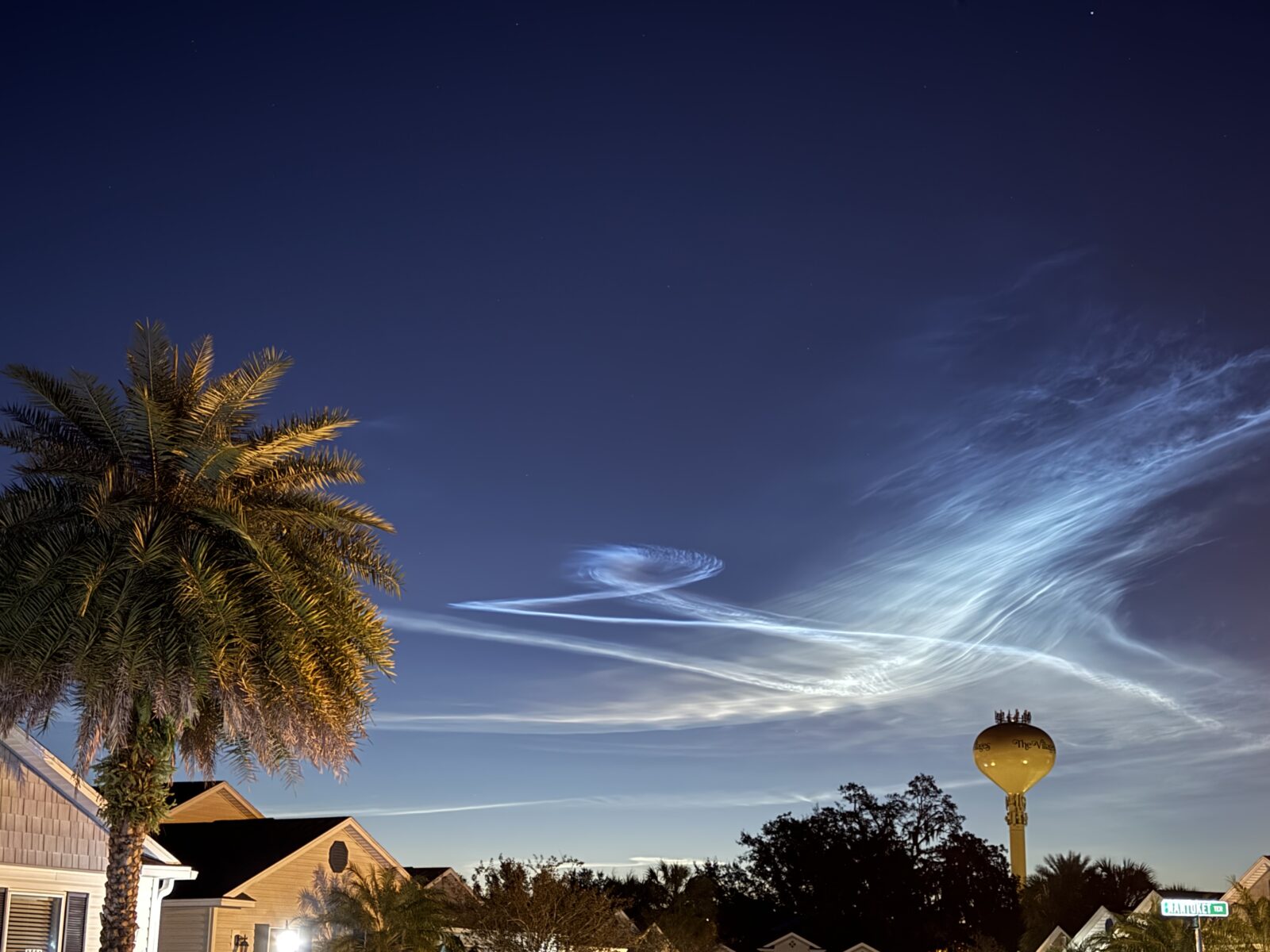
Florida skies have a reputation for being especially striking—brilliant blues by day, and dazzling pinks, oranges, and purples at sunrise and sunset. A few key factors explain why they look so pretty:
1. Moisture in the Air
Florida’s humid, subtropical climate means there’s a lot of moisture suspended in the atmosphere. Those tiny water droplets scatter light differently than dry air, making skies appear more vivid. The extra moisture also helps create the fluffy, dramatic cumulus clouds that add depth and contrast to the sky.
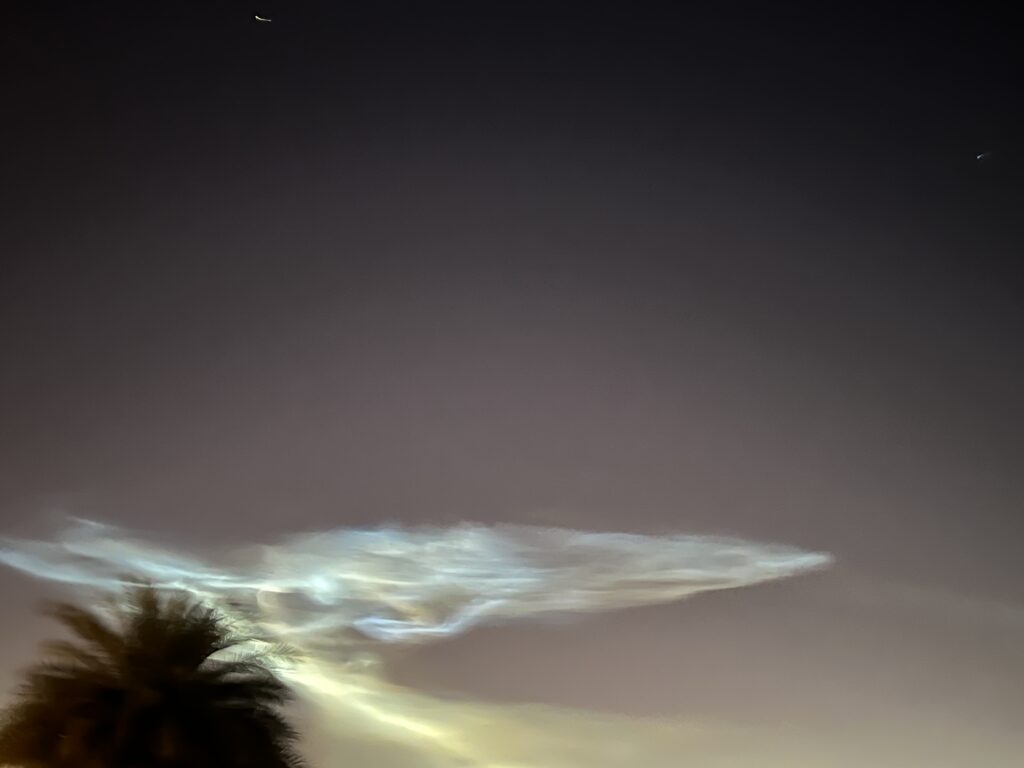
2. Flat Landscape & Horizon Views
Because much of Florida is flat, with wide stretches of ocean and inland lakes, you often get unobstructed horizons. That gives sunrise and sunset light more room to spread across the sky, painting those sweeping color palettes people love.
3. Angle of the Sunlight
Florida sits close to the equator compared to most of the U.S., so the sun is higher and more direct throughout much of the year. During morning and evening, when the sun is lower, the light travels through more atmosphere—scattering blue light and leaving behind the warm oranges, reds, and purples.
4. Cloud Drama
Summer in Florida often brings towering thunderheads and afternoon storms. These clouds catch and reflect sunlight in stunning ways, especially when they’re lit from below at sunset. The mix of stormy gray, brilliant gold, and fiery orange makes for spectacular skies.

5. Airborne Particles
Sea salt, pollen, and other natural particles in Florida’s air enhance scattering effects. While pollution in some places dulls sunsets, Florida’s mix of ocean spray and clean coastal breezes can actually make skies more vibrant.
The Result: A unique blend of moisture, flat horizons, tropical sunlight, and cloud formations makes Florida’s skies especially photogenic—whether it’s a bright midday blue or a pastel sunset over the Gulf or Atlantic.