
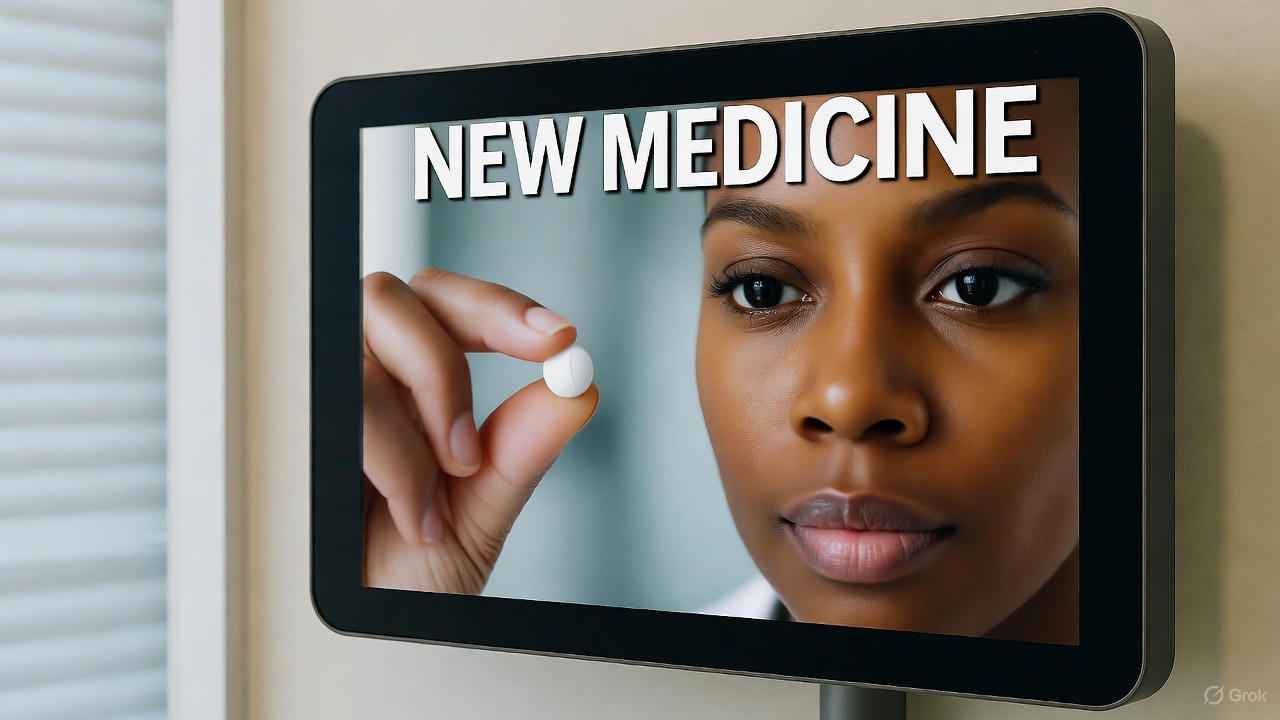
💊 Now Serving Side Effects: How Big Pharma Took Over the Waiting Room
We’ve all been there—sitting in the doctor’s office, bored, anxious, and stuck staring at a screen that’s supposedly for “patient education.” Instead, it’s another parade of smiling actors and miracle drugs, each followed by the familiar chant of “may cause dizziness, nausea, insomnia, death, or spontaneous disco dancing.”
It’s one thing to see these commercials at home between sitcoms and weather updates. But in the doctor’s office—where we go for medical advice, not marketing—the intrusion feels downright absurd.
A Captive Audience for Big Pharma
You can’t change the channel or mute the screen. You’re a captive audience. These in-office ads are designed to look informative but they’re pure persuasion—crafted by billion-dollar marketing teams who know exactly how to make you ask your doctor about the latest pill.
The United States and New Zealand are the only two countries in the world that even allow direct-to-consumer prescription drug ads. Everywhere else, it’s considered unethical. Here, it’s normal. We’ve become so used to it that drug ads now follow us into the exam room like a persistent cough we can’t shake.
Big Pharma’s Big Budget
The pharmaceutical industry spends more than $14 billion a year just on advertising to consumers—almost as much as it spends developing new drugs. That’s a staggering amount of money aimed at convincing you that the next miracle medication will fix everything from fatigue to social awkwardness.
And now, instead of spending that money just on TV or social media, Big Pharma is buying up the walls and screens of clinics, where patients are most vulnerable. That’s not health education—it’s product placement in the most personal setting possible.
Are We Being Conditioned to Need It?
When every ache, mood swing, or worry has a commercial solution, it’s easy to start thinking that good health can only come from a prescription bottle. These ads aren’t just selling drugs—they’re shaping our mindset. They teach us to see normal life as a series of conditions waiting for treatment.
That’s not medicine; that’s marketing psychology.
What We Deserve Instead
Patients deserve to walk into a medical office focused on care, not commerce. We don’t need to be “educated” by the companies that profit from our symptoms. Real education means understanding options, prevention, and wellness—not watching a commercial for the latest pill while waiting for a flu shot.
So maybe it’s time we prescribe something new: fewer screens, fewer sales pitches, and a little more trust in the space where health—not hype—should be the priority.